Your step-by-step Shirdi darshan plan
From shoe stand to sanctum — how the queue actually works, what to skip, what to carry and when to arrive.
Walking into Shirdi for the first time can feel disorienting. The lanes are narrow, signage points in three directions, the queue complex is huge, and well-meaning touts will offer you “fast darshan” the moment you step off the bus. This Shirdi darshan guide is the practical, no-nonsense walkthrough we wish someone had given us on our own first yatra. It is editorial — we are independent of the official Shri Sai Baba Sansthan Trust, which manages all temple operations.
How the temple complex is laid out
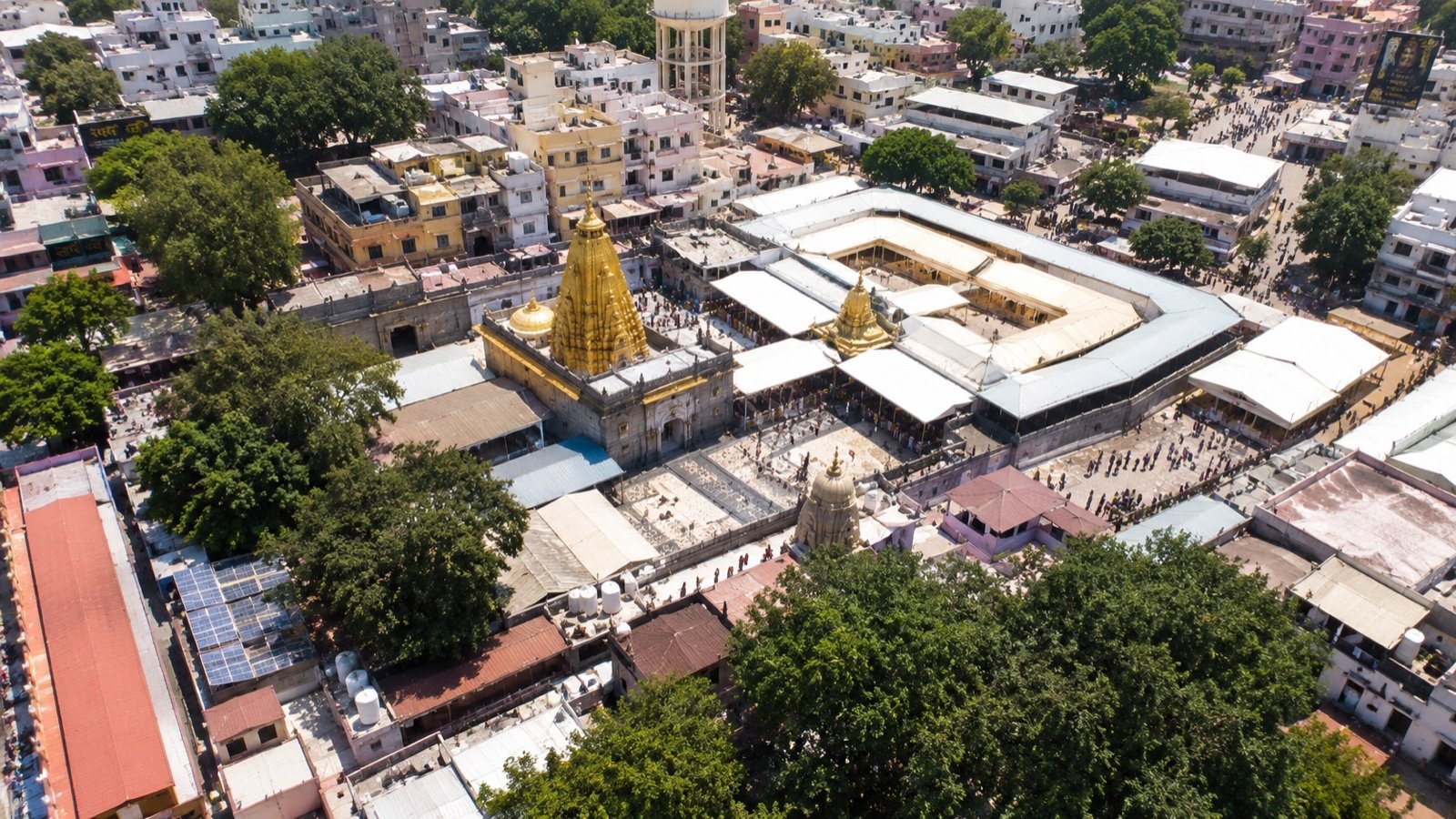
Everything you need is concentrated in a roughly 500-metre-wide rectangle. The Samadhi Mandir sits in the middle. On its eastern side is the enormous covered queue complex, with shoe stands, cloakrooms, lockers and seating. To the west is Dwarkamai — Baba’s actual home for sixty years — and immediately beside it is Chavadi. The Gurusthan neem tree is in the south-east corner of the same compound. Behind the queue complex are food halls, prasadalaya, donation counters and the Trust’s accommodation booking office. Plan your circuit in this order: queue complex → Samadhi → Dwarkamai → Chavadi → Gurusthan → prasadalaya. That order minimises backtracking and uses the natural flow of pilgrim traffic.
Free darshan vs. paid passes — what is the real difference
The Sansthan Trust offers four distinct ways to reach the murti. Understanding the difference will save you both time and money.
Free darshan
Join the regular queue at the queue complex. No booking, no fee, no ID. Wait time varies from 1 hour (early morning weekdays) to 8+ hours (festival days).
Read GuideSulabh Darshan token
Free token issued at the queue complex that gives you an allotted return time. You wait in a hall with seating instead of standing in line. Tokens run out by mid-morning.
Read GuidePaid darshan pass
A faster queue with shorter waiting time. Bookable online through the Trust portal or at the counter. Token slots are time-bound.
Read GuideVIP / Aarti pass
Allows the holder to sit close to the murti during a specific aarti. Limited tickets released online weeks in advance. Details on our VIP darshan pass page.
Read GuideThe best times to plan darshan
Crowd patterns at Shirdi are predictable. The temple sees its lightest crowds from Tuesday to Saturday in the non-festival months — January (after Makar Sankranti), February, June and September. Within a normal day, the queue is shortest in the very early morning (5:15 AM to 7 AM, after Kakad Aarti) and again immediately after Madhyan Aarti (around 1:30 PM, when the previous queue empties out before the next builds up).
Crowds peak on Thursdays (Baba’s day), Sundays, public holidays and during the four big festivals — Ram Navami in March, Guru Purnima in July, Sai Punyatithi in October and Datta Jayanti in December. On Punyatithi day, queues can extend beyond ten hours. If your darshan must fall on a peak day, arrive overnight, attend Kakad Aarti, and complete Samadhi darshan before 6 AM.
Step-by-step — your first hour in Shirdi
Assume you arrive in town by 3 AM on a weekday.
Check into accommodation
Drop your luggage at your hotel or Bhakta Niwas. Bags are not allowed inside the temple complex and you will lose precious queue time hauling them around. See our accommodation guide for options.
Walk to the temple by 4 AM
The east gate (queue complex entrance) opens at 4:00 AM sharp. Carry only your wallet, water bottle and a small bag for prasad. Leave phones if possible.
Deposit shoes and valuables
Use the free shoe stand and the locker counter (also free) at the entrance. Both are well-staffed and trustworthy. Get a token receipt.
Pass security and enter the queue
Metal detectors are quick. Mobile phones, cameras, leather goods and food are not permitted inside. Belts and watches are fine.
Walk through the seated queue hall
The hall has ceiling fans, drinking water, and televised live aarti feeds. On weekdays you can be at the inner darshan window within 20 to 45 minutes.
Stand before the murti
At the Sabha Mandap you will pass within touching distance of the silver railing. Pause briefly, bow, and step on — staff will guide you. Do not stop for selfies; you are inside a place of worship and the queue behind you stretches for kilometres.
Touch the Samadhi
Below the murti is the Samadhi itself. Touch the marble, offer flowers if you carried any (sold outside), and exit through the side aisle.
From entry to exit, allow about 45 minutes on a normal weekday morning, 90 minutes on a Sunday, and 4 to 8 hours on a peak Thursday or festival day.
What to carry and what to leave behind
Dress code and etiquette
Shirdi has no rigid dress code, but the Sansthan requests modest attire. Avoid sleeveless tops, tank tops, shorts and ripped jeans. Sarees, kurta-pyjama, salwar-kameez or simple shirts and trousers are all fine. During aarti, traditional Indian wear is strongly encouraged. Full details — including festival-specific norms — are on our yatra rules and dress code page.
Etiquette inside the temple is straightforward. Do not push. Do not raise your voice. Do not stop the queue to fold your hands repeatedly — one bow is enough. Do not attempt to photograph the murti through any device. Do not bargain with priests for special treatment. Sai Baba accepted everyone equally — the murti deserves the same approach.
If you have only three hours in Shirdi
Transit pilgrims with a short layover can still complete a meaningful darshan. The minimum viable Shirdi yatra is approximately three hours and looks like this: arrive at the queue complex, deposit shoes and bags, complete Samadhi darshan (1 to 2 hours), step out and walk five minutes to Dwarkamai for ten minutes of silent sitting beside the dhuni, then exit through Gurusthan on your way back to the parking lot. If time permits, eat at the Sansthan prasadalaya — a full vegetarian meal for a nominal donation. Skip the markets, the photo studios and the bus tours selling “complete Shirdi darshan in 30 minutes”. They are not necessary.
If you have a full 24 hours
A complete Shirdi yatra ideally spans one overnight stay. The classical schedule is: Day 1 — arrive by afternoon, check in, attend Dhoop Aarti at sunset, dine at prasadalaya, attend Shej Aarti at 10:00 PM. Overnight — sleep at Bhakta Niwas. Day 2 — wake by 4:15 AM, attend Kakad Aarti at 5:15 AM, complete Samadhi darshan in the post-aarti window, visit Dwarkamai, Chavadi, Gurusthan and Khandoba Mandir, return for Madhyan Aarti at noon, eat lunch and depart by afternoon. This schedule lets you attend three of the four daily aartis without rushing.
Sulabh Darshan — the smartest free option
Most first-time pilgrims do not know about Sulabh Darshan, and it is the single most useful tip in this guide. Sulabh tokens are issued free at the queue complex from early morning. The token assigns you a return time slot — for example, 11:30 AM to 12:30 PM. Until that slot you are free to rest at your hotel, eat, visit Dwarkamai. When your slot opens, you return to the temple and join a separate, much shorter queue. The system effectively converts a 4-hour standing wait into a 1-hour comfortable wait plus rest time.
Tokens are limited per day and tend to run out by 9 or 10 AM on peak days. Arrive by 5 AM if you want a Sulabh token on a Thursday or Sunday.
What happens during an aarti
Standing in the queue during an aarti is a different experience from a normal darshan. The hall is louder, the music more intense, the doors to the inner sanctum are closed during the puja itself and reopen only after the aarti concludes. If you find yourself in queue when an aarti is about to start, do not be alarmed — the queue is paused briefly, you can hear the singing on speakers, and you proceed as normal once the aarti ends. To sit inside the sanctum during an aarti you need a specific aarti pass obtained from the Trust portal. Full details of all four aartis and their schedules are on our aarti timings page.
Beware of touts and unofficial agents
Around every bus stop, railway station and hotel lobby in Shirdi, you will find men offering “VIP darshan in 30 minutes for ₹2,000”. These offers are unauthorised. The Sansthan does not sell skip-queue access through middlemen. The only legitimate fast-track options are the Trust’s own paid darshan pass, the aarti pass, and the Sulabh token — all bookable through the official portal or counters. Pay anyone else and you risk being walked past the same queue you could have stood in for free. Our online booking services page lists only the verified Sansthan channels.
After your darshan
Once you exit the Samadhi Mandir, walk to Dwarkamai. Sit beside the dhuni for as long as you can. Receive udi from the priest. Walk across to Chavadi — silent in the morning, alive on Thursday nights. Finish at Gurusthan in the south corner. Pick up a small bottle of udi at the official Sansthan counter — never from street vendors. Eat at the prasadalaya. Then, with a clear and grateful mind, begin your journey home.
Mukh Darshan — the free glimpse that needs no pass
Mukh Darshan — literally “face darshan” — is a free, quick way to see Baba’s Samadhi from a distance, with no pass, no fee and almost no wait. A small door near Gate No. 3, beside Dwarkamai, opens into a steel-barricaded passage with a direct if distant view of the silver Singhasan and the marble murti. Most pilgrims finish in 15 to 30 minutes: a few unhurried seconds to fold your hands and pray, without touching the Samadhi or placing offerings. Gate numbering has shifted over years of reconstruction, so ask a security volunteer for the “Mukh Darshan” door when you arrive. It is always free — anyone charging for it is running a scam.
One firm rule catches thousands of pilgrims: the passage is a dead-end aisle and never connects to the main darshan line. Once you take the distant view, you exit the same way — for the close-up darshan you must then walk to the queue complex and join the regular queue separately. Decide your route before you enter. Mukh Darshan suits day-trippers with tight train or bus timings, elderly pilgrims who cannot stand for long, devotees who want one final glimpse before leaving town, and Thursday or festival visitors facing the longest queues.
Two related facts worth knowing: pregnant women can use the same separate free priority queue as senior citizens and differently-abled devotees, and wheelchairs are available on request at the Public Relations Officer office near the queue complex. The Sansthan also streams live darshan of the Samadhi free of cost on its website and YouTube channel every day.
Why Thursday is different — and its calmest window
Thursday is Guruvar, the day Hindus traditionally honour their Guru, and Sai Baba himself told devotees that Guruvar was dear to him. His weekly Chavadi procession was held on Thursday nights during his lifetime, and that tradition still anchors the day — against a quiet weekday, the Thursday crowd can feel two to three times larger.
The rush does not build evenly, so use its rhythm. Many devotees arrive on Wednesday night itself, and overnight queues form well before Kakad Aarti. The heaviest push runs from 4 AM to 8 AM, eases briefly late morning before Madhyan Aarti pulls a fresh crowd, and the evening surge rebuilds toward Dhoop and Shej Aarti as families return after work. The calmest stretch is usually the early afternoon, roughly 2 PM to 5 PM, when the worst congestion has cleared — the wait can drop from hours to under ninety minutes. If you hold a paid darshan pass for a Thursday, reach your gate 45 to 60 minutes before your slot, and book as early as you can, because Thursday slots sell out within hours of release.
What to pack, season by season
Shirdi’s weather splits into three clear seasons, and what you carry should change with the month. In every season, keep the constants: an original government photo ID, cheap slip-on chappals (thousands of pairs pile up at the shoe stand, and laces slow you in a moving queue), a small cloth pouch for ID, cash and udi, and your personal medicines. If you booked a darshan or aarti pass online, the name on your ID must match the booking exactly — mismatches are the single biggest cause of refusal at the gate.
- Summer (March–May): the hardest season, with highs of 34–42°C. Pack light, loose cotton in pale colours, a cap, sunglasses and high-SPF sunscreen. A cotton stole to drape over your head and oral rehydration sachets make a real difference in a midday queue — better still, aim for the early Kakad slot or after sunset.
- Monsoon (June–September): July and August are the wettest months, though Shirdi’s rainfall is moderate. A compact umbrella, a light raincoat and quick-dry rubber slippers beat leather sandals on wet temple floors. Keep your ID and booking printout in a waterproof pouch, because a soggy, smudged document slows you at the verification desk.
- Winter (October–February): days stay mild and heavy woollens are unnecessary. A light sweater, fleece or shawl is enough for the early-morning Kakad Aarti and cool evenings; add moisturiser and lip balm for the dry air. A thin scarf doubles as head cover for aarti.
Reaching Shirdi and booking a room
Shirdi connects well by air, rail and road. Shirdi Airport sits about 14 km from the temple, Sainagar Shirdi is the nearest railway station, and buses run from Mumbai, Pune and Nashik. Local autos and shared cabs cover the short hop from the station or airport, and it is wise to book your return ticket before you arrive.
The Trust runs large, affordable guesthouses near the temple, with rooms and dormitory beds bookable online and at the counter. Carry the same government photo ID used on the booking — the name must match at check-in. See our accommodation guide for the full range of options and current tariffs.
Once in town, do not skip the famous Shirdi laddu prasad, sold at the official counters near the temple. And set aside at least half a day for the full circuit of sacred spots — nearby Lendi Baug and the Khandoba temple round out the pilgrimage beyond the sites covered above.
Frequently Asked Questions
What is the best time of day for Shirdi darshan?
The shortest queues at Shirdi are typically between 5 AM and 7 AM (immediately after Kakad Aarti) and again from 1:30 PM to 3:30 PM (after Madhyan Aarti). Evening crowds peak before Dhoop Aarti and again after Shej Aarti. Weekday mornings are far quieter than weekends and Thursdays.
How long does the Shirdi darshan queue take?
On a normal weekday the free queue takes 1 to 2 hours from entry to exit. On Sundays and public holidays expect 3 to 5 hours. On Thursdays and during festivals like Ram Navami, Guru Purnima or Sai Punyatithi, the wait can extend beyond 8 to 10 hours.
Can I take my mobile phone inside the temple?
No. Mobile phones, cameras and other electronic devices are not permitted inside the Samadhi Mandir. Free locker facilities are available at the queue complex entrance to deposit phones, cameras and other valuables. Tokens are issued for retrieval after darshan.
Is Shirdi darshan free or do I need to pay?
Standard Samadhi Mandir darshan is completely free. The Sansthan additionally offers a free Sulabh Darshan time-slot token, a paid darshan pass at approximately ₹200, and premium aarti passes for sitting inside the sanctum during an aarti. No payment is required for ordinary pilgrim darshan.
What should I wear for Shirdi darshan?
Modest, clean clothing is expected. Sleeveless tops, shorts, short skirts and ripped jeans are discouraged. Traditional Indian wear like saree, salwar-kameez, kurta-pyjama or a simple shirt and trousers is appropriate. For aarti attendance, traditional Indian dress is strongly recommended.
What is Sulabh Darshan at Shirdi?
Sulabh Darshan is a free token-based system run by the Sansthan that assigns pilgrims a return time slot. Instead of standing in the long queue, you collect a token in the morning and return at your allotted hour. Tokens are limited per day and usually run out by 9 to 10 AM on busy days.
Can senior citizens get separate darshan at Shirdi?
Yes. The Sansthan operates a separate, much shorter queue for senior citizens aged 65 and above, and for differently-abled pilgrims. Carry photo identity proof showing your date of birth. The senior citizens’ entrance is on the north side of the queue complex.
How early should I reach Shirdi for Kakad Aarti darshan?
Kakad Aarti begins at approximately 5:15 AM. To join the queue and witness the aarti from the hall, reach the queue complex by 4:30 AM. To sit inside the sanctum during Kakad Aarti you need a pre-booked aarti pass, available through the Trust’s online booking portal.
