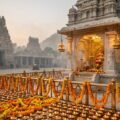
The Shirdi Gurusthan Pooja is not a ticket you buy. It is a simple, free act of faith performed beside the ancient neem tree where a young Sai Baba was first seen in deep meditation. You light an incense stick, fold your hands, and walk quietly around the raised platform.
Devotees have done exactly this for over a century. Many believe the act eases ailments and calms a troubled mind. Because searches for this ritual often lead people to fake “pooja booking” pages, this guide separates the real, sacred practice from the money traps built around it.
Gurusthan Pooja at a Glance
- What it is: Lighting incense (agarbatti) and offering silent prayer at the Gurusthan neem-tree shrine.
- Cost: Free. No ticket, no online booking, no fee to any private website.
- Most sacred days: Thursdays and Fridays, when devotees gather in the largest numbers.
- Where: Inside the Samadhi Mandir complex — not a distant location.
- Timings: Roughly 4:00 AM to 10:00 PM, in step with the main temple.
- Prasad: A single sweet neem leaf and a pinch of vibhuti (sacred ash) from the lamp.
What Is the Shirdi Gurusthan Pooja?
The Shirdi Gurusthan Pooja is the personal worship devotees offer at Gurusthan, the neem-tree spot where Sai Baba first appeared as a boy of about sixteen. There is no priest-led ceremony you must pay for. Instead, each pilgrim lights an incense stick, bows at the silver padukas, and circles the platform in prayer.
Gurusthan means “place of the Guru.” According to the Shri Sai Satcharitra, Baba pointed to this ground and called it his own Guru’s resting place. So the pooja here is really an act of reverence to Baba’s guru-tattva, the eternal teacher principle.
The shrine sits under an old neem tree that devotees hold sacred. A portrait of Sai Baba, a Shiva lingam, a Nandi and a marble statue share the small raised platform. Because the spot marks Baba’s first public appearance, it is usually the second stop on any yatra, right after the main Samadhi darshan.
Why Devotees Light Incense on Thursdays and Fridays
Tradition holds that Sai Baba himself blessed this practice. Devotees believe that those who burn incense at Gurusthan on Thursdays and Fridays will find their troubles eased and their prayers answered. Thursday is Baba’s own day, so the platform draws its heaviest crowds then, with Friday close behind.
This belief is a matter of faith, not a medical claim. The Sansthan does not promise cures, and neither should anyone else. Still, the ritual brings genuine comfort, because the simple act of lighting a lamp and surrendering a worry has calmed pilgrims for generations.
If you plan your visit around these days, expect longer lines but also a powerful shared energy. When you want a quieter, more personal pooja, a weekday morning works beautifully instead.
How to Perform the Shirdi Gurusthan Pooja
The ritual is short and needs no special items — the shrine supplies the incense and lamp. Follow these steps for a calm, complete Shirdi Gurusthan Pooja that respects the space and the crowd behind you.
- Finish Samadhi Mandir darshan first. Exit the main shrine and follow the marked path; Gurusthan sits barely fifty metres away.
- Light a single incense stick. A small stand at the foot of the steps holds agarbatti. Fix one in the holder, then step up barefoot.
- Circle the platform three times. Walk clockwise around the neem-tree platform with folded hands. Many softly chant “Om Sai Shri Sai Jaya Jaya Sai” while they walk.
- Bow at the padukas and ring the bell. Touch your head to the step near the silver padukas, since these mark where Baba sat.
- Take a neem leaf as prasad. Pick a single offered leaf from the basket. Do not pluck bunches from the tree, because that is considered disrespectful.
The whole pooja takes ten to fifteen minutes when the shrine is calm. During peak hours, keep your prayer brief so the queue keeps moving.
The Sweet Neem Leaf You Can Taste
The neem at Gurusthan carries a famous legend. Devotees across generations say its leaves taste sweet, not bitter like every other neem. The Satcharitra records that Baba drew attention to this quality as a sign of the spot’s sanctity.
Whatever the science, the experience feels real to thousands each day. Place one offered leaf on your tongue and judge for yourself. Many pilgrims carry a leaf home, wrapped in clean cloth, and keep it in their home shrine beside Udi from Dwarkamai.
The Shiva Lingam Abhishek at Gurusthan
Below the neem tree sits a Shiva lingam with a Nandi in front. On Mondays, the day of Lord Shiva, devotees perform a small abhishek here by pouring water and milk over the lingam. During Mahashivratri the queue for this abhishek grows long, so arrive early if you want to take part.
This Monday abhishek involves only a nominal fee paid at the Sansthan counter inside the premises. It is separate from the free incense ritual, and it is separate again from the ticketed Abhishek Pooja held in the main Abhishek Hall. Keeping these three apart saves you from confusion and from touts.
Is There an Official Paid Shirdi Gurusthan Pooja?
No. There is no ticketed “Gurusthan Pooja” that you book and pay for online. The incense ritual at the neem tree is free for every devotee, and no genuine channel charges for it. Any website asking for advance payment to “book your Gurusthan pooja” is not authorised.
The Shri Saibaba Sansthan Trust has stated this plainly. On its official website, the Trust warns that collecting money for any pooja or offering, by any outside website or channel, is illegal and unauthorised. That warning exists precisely because scams around the Shirdi Gurusthan Pooja and other sevas keep appearing.
People often mix up the free Gurusthan ritual with the Trust’s genuine, ticketed Abhishek Pooja. They are not the same. The table below shows the difference at a glance.
| Feature | Gurusthan Incense Pooja | Official Abhishek Pooja |
|---|---|---|
| Location | Gurusthan neem-tree shrine | Abhishek Hall, near Samadhi Mandir |
| Cost | Free | Listed around ₹101 per couple/person |
| Booking | None — walk in | online.sai.org.in, 2–60 days ahead |
| Who leads it | You, personally | Temple priests, in batches |
| Duration | 10–15 minutes | About 45–60 minutes |
Treat the ₹101 figure as indicative, because seva rates can change. Confirm the current amount on the Trust’s own portal before you travel. You can review the full booking process on our Shirdi online booking walkthrough.
How to Spot a Fake Pooja Booking Site
Fraud pages copy temple photos and official-looking logos, then demand UPI payment for “guaranteed” poojas. A few checks protect you every time. First, remember that the incense ritual costs nothing, so any fee for it is a red flag.
- They ask for advance payment for a “Gurusthan pooja” or a “special guru pooja” package.
- They promise guaranteed cures, VIP access, or same-day miracles.
- Their web address is not the official online.sai.org.in portal.
- They pressure you to pay quickly before “slots run out.”
When in doubt, book only through the Trust and pay only at counters inside the temple. That single habit defeats almost every Shirdi scam.
Best Time for Shirdi Gurusthan Pooja
Gurusthan stays open from roughly 4:00 AM to 10:00 PM, following the main Samadhi Mandir hours. Some travel pages wrongly list a 6:00 AM opening, but the shrine actually welcomes early pilgrims from dawn, right after Kakad Aarti. Always confirm the day’s exact timing during festivals.
The platform grows crowded straight after the Madhyan (noon) and Dhoop (sunset) aartis. For a calmer Shirdi Gurusthan Pooja, aim for the window between 11:00 AM and noon, or after 8:00 PM. You can line up your visit using our Shirdi aarti schedule.
Weekdays from Monday to Wednesday stay lightest overall. Thursday and Friday remain the most sacred yet the busiest, so choose your day based on whether you want energy or quiet.
Where Exactly Is Gurusthan?
Gurusthan lies inside the Samadhi Mandir complex, just to the left as you exit after darshan. It is not a separate temple across town. Several travel articles wrongly claim it sits “14 km from the main town,” which confuses first-time pilgrims badly.
In truth, you never leave the temple compound to reach it. From the rear of the main shrine, a short marked path brings you straight to the neem-tree platform. A first-aid centre stands nearby, near the Butti Wada section, if anyone needs help.
For the shrine’s full history and the story of Baba’s first appearance, see our detailed Gurusthan Shirdi guide, or read about the neighbouring Samadhi Mandir.
What to Offer and What to Avoid
Simplicity defines worship at Gurusthan. A single incense stick and a folded prayer mean more here than any elaborate offering. The shrine already provides what you need, so you can arrive empty-handed and still complete a full pooja.
- Do light one agarbatti and offer silent prayer or a soft Sai mantra.
- Do take only one or two offered neem leaves as prasad.
- Do not pluck leaves or bark directly from the sacred tree.
- Do not photograph on the raised platform, though the canopy from below is fine.
- Do not wear heavy footwear onto the marble; the platform is barefoot only.
These small courtesies keep the shrine peaceful for the pilgrim behind you. Since the space is tiny, a quick, sincere pooja serves everyone better than a long one.
Insider Tips Most Guides Skip
A few practical habits make the visit smoother. First, carry your own small agarbatti packet during festivals, because the shrine stands can run empty when crowds surge. You still light it at the shrine, so the ritual stays intact.
Second, combine your Monday visit with the Shiva abhishek if the timing suits, since both happen at the same platform. Third, keep your phone in the cloakroom, as photography rules are strict and firmly enforced here.
Finally, treat Udi from Dwarkamai and the sweet neem leaf from Gurusthan as a pair. Many devotees keep both together at home, and the two prasads together tell the whole Shirdi story.
Before You Go
The Shirdi Gurusthan Pooja rewards sincerity, not spending. Light one incense stick, walk the platform three times, bow at the padukas, and carry a sweet neem leaf home. That is the complete ritual, and it costs nothing.
Reserve any payment for the genuine Abhishek Pooja booked through the official portal, and ignore every site that tries to sell you a “Gurusthan pooja.” Visit on a weekday morning for calm, or on Thursday for the crowd’s shared devotion. Either way, the neem tree that first sheltered a young Baba still offers the same quiet blessing it always has.
Frequently Asked Questions
Is the Shirdi Gurusthan Pooja free?
Yes, the Shirdi Gurusthan Pooja is completely free. Lighting incense and praying at the neem-tree shrine costs nothing, and no genuine channel charges for it. Any website demanding advance payment for a “Gurusthan pooja” is unauthorised, so avoid it.
Can I book a Gurusthan Pooja online?
No online booking exists for the Gurusthan incense ritual, because it is a free walk-in practice. Only the separate Abhishek Pooja in the main Abhishek Hall is bookable, through the official online.sai.org.in portal. Do not pay any third-party site for a Gurusthan pooja.
Why do devotees light incense at Gurusthan?
Devotees light incense at Gurusthan because tradition holds that Baba blessed this act on Thursdays and Fridays. Many believe it eases ailments and answers prayers. This is a matter of faith rather than a proven medical outcome, so treat it as devotional practice.
What are the Gurusthan timings in Shirdi?
Gurusthan generally stays open from 4:00 AM to 10:00 PM, matching the Samadhi Mandir. Some guides list 6:00 AM incorrectly. The shrine opens early after Kakad Aarti, though festival days may shift the schedule, so confirm before you travel.
Are the neem leaves at Gurusthan really sweet?
Devotees across generations say the neem leaves here taste sweet rather than bitter. You may place a single offered leaf on your tongue and decide for yourself. It is a popular prasad, and many pilgrims carry one home to their shrine.
What is the difference between Gurusthan Pooja and Abhishek Pooja?
The Gurusthan Pooja is a free incense ritual at the neem-tree shrine. The Abhishek Pooja is a ticketed, priest-led ceremony in the Abhishek Hall, listed around ₹101 and booked in advance. They happen at different spots and should never be confused.
Which day is best for Gurusthan darshan?
Thursday and Friday are the most sacred days for Gurusthan, though also the busiest. For a quieter visit, choose a weekday between Monday and Wednesday. Mondays additionally offer the Shiva lingam abhishek at the same platform.
Is Gurusthan far from the Samadhi Mandir?
No, Gurusthan sits inside the same complex, only about fifty metres from the Samadhi Mandir. Claims that it lies 14 km away are false. You reach it on foot within a minute of finishing your main darshan.